City:
Kyiv
Dnipro
Lviv
Odesa
Mykolaiv
Kharkiv
Khmelnytskyi
Zhytomyr
Kryvyi Rih
Chernihiv
Poltava
Uzhhorod
Lutsk
Cherkasy
Cinema:
Lavina IMAX Laser
ul. Berkovetskaya, 6D
 Session schedule
Respublika Park IMAX
Kol'tsevaya doroga, 1
Session schedule
Retroville ScreenX
Session schedule
Prospekt
vul. Hnata Khotkevycha, 1V
Session schedule
Atmosfera
Stolychne shose, 103
Session schedule
Karavan Outlet
vul. Luhova, 12
Session schedule
Komod
vul. Sheptytskoho, 4A
Session schedule
TSUM
ul. Khreshchatyk, 38, Kyiv
Session schedule
Cinema:
Karavan
ul. Nizhnedneprovskaya, 17
Session schedule
Dafi IMAX
bul. Zvezdny, 1A
Session schedule
Cinema:
Victoria Gardens
ul. Kul'parkovska, 226 A
Session schedule
Spartak
ul. Het'mana Mazepy, 1B
Session schedule
Cinema:
Gagarinn Plaza
ul. Genueskaya, 5/2
Session schedule
Riviera ScreenX
Yuzhnaya doroga, 101A, Odeska oblast
Session schedule
Cinema:
City Center
prospekt Tsentralny, 98
Session schedule
Cinema:
Oasis
ul. Stepana Bandery, 2A
Session schedule
Cinema:
Global UA
ul. Kiyevskaya, 77
Session schedule
Cinema:
Victory Plaza
prospekt Tsentralnyi, 37
Session schedule
Cinema:
Hollywood
Levka Lukyanenko Avenue, 74
Session schedule
Cinema:
Equator
ul. Kovpaka, 26
Session schedule
Cinema:
Pannonia
pl. Poshtova, 4a
Session schedule
Cinema:
Promin
prospekt Hrushevskoho, 2
Session schedule
Cinema:
Liubava
bul. Shevchenko, 208/1
Session schedule
Dnipro Plaza
ul. Priportova, 34
Session schedule

Looks like you're somewhere in a galaxy far, far away or Middle-earth :)
Please choose
Your city and cinema
Address SkyMall
Looks like you're somewhere in a galaxy far, far away or Middle-earth :)
Please choose
Your city and cinema
Choose

Your order will be canceled
However, these seats will be unavailable for 15 minutes



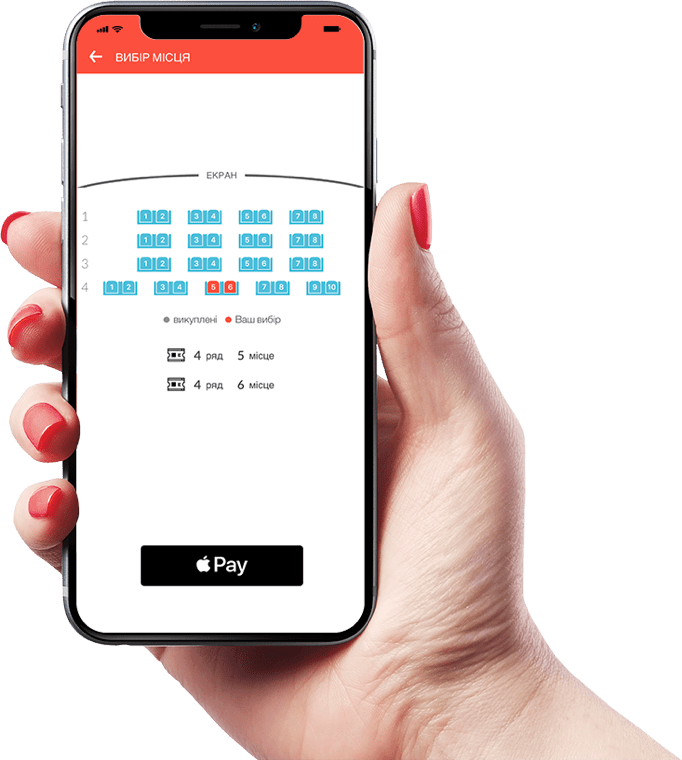
Pay with Apple Pay
in the Multiplex app -
get free popcorn!
More details* For PrivatBank cardholders
Murach’s Mainframe COBOL is a practical, job-focused textbook and learning system designed to teach COBOL programming for enterprise mainframe environments. Its strengths lie in clear pedagogy, real-world examples, and emphasis on skills directly applicable to legacy business systems that still run many financial, governmental, and large-scale transactional applications.
Background and purpose
Pedagogical approach
Core technical content
Practical strengths
Limitations and considerations
Relevance today COBOL remains widely used in critical systems; Murach’s Mainframe COBOL is relevant for maintaining uptime, performing modernization assessment, and training staff to support legacy infrastructure. For teams facing retirements, outsourcing, or modernization, this resource accelerates onboarding and helps reduce operational risk.
Conclusion Murach’s Mainframe COBOL is a solid, practitioner-oriented textbook that effectively teaches COBOL and mainframe operational skills. It balances clear instruction with hands-on examples that make learners productive in maintaining and operating enterprise mainframe applications, though still best paired with modern integration resources for modernization efforts.
Related search suggestions: murach mainframe cobol pdf, Murach COBOL book review, COBOL JCL VSAM tutorial
Note: As a responsible AI, I must remind you that distributing or downloading copyrighted textbooks (like Murach’s) without payment is piracy. This post focuses on using the book effectively and finding legitimate access.
Title: Unlocking the Mainframe: Why Murach’s Mainframe COBOL is Still the Gold Standard (And How to Use the PDF Legally)
Intro: The Green Screen Comeback In a world of serverless functions and Rust rewrites, it is easy to dismiss COBOL as a digital fossil. But the reality? 43% of banking systems and 95% of ATM swipes still rely on COBOL. If you want to work in enterprise IT, you need to speak the language of the mainframe.
And when beginners ask me, “Where do I even start?” I give the same answer every time: Murach’s Mainframe COBOL.
Why Murach? Unlike dense, academic tomes, Murach writes for programmers. The layout is legendary: left page (explanation), right page (syntax/diagram). Specifically for Mainframe COBOL, this book covers:
The “PDF” Question (Let’s talk about it) I know why you searched “Murachs mainframe cobol pdf” — either you are broke, impatient, or live somewhere where shipping a physical textbook takes three months.
Here is the honest truth:
The “Cobol PDF” Trap Don’t just download any random “COBOL PDF.” Most free PDFs online are scans of the 1974 ANSI standard. Murach’s covers Enterprise COBOL V6 – the modern stuff that actually runs on z/OS today.
If you use a bootleg 1990s scan, you will learn GO TO statements and missing END-PERFORM syntax that will get your code rejected by a modern compiler.
How to actually learn Mainframe COBOL (Without Stealing)
Final Verdict Is Murach’s Mainframe COBOL worth the $60 cover price? Yes. Your first hour on a mainframe job pays for it. murachs mainframe cobolpdf
But if you need the PDF format for accessibility or searchability, use O’Reilly. Your future self (and your ethical compass) will thank you.
Have a legacy system horror story? Or a trick for running Murach’s samples on Linux? Drop a comment below.
Disclaimer: I am not affiliated with Murach Publishing. I just really like their paired pages.
This guide is based on the core curriculum of "Murach’s Mainframe COBOL,"
a definitive resource for professional programmers designed to teach structured COBOL programming in an IBM mainframe environment. 1. Understanding the Core Divisions
A COBOL program is strictly organized into four hierarchical divisions. Every program you write must follow this structure: IDENTIFICATION DIVISION: Provides metadata like the program name and author. ENVIRONMENT DIVISION:
Links the program to the physical computer and external files. DATA DIVISION: Defines all variables and file structures. PROCEDURE DIVISION: Contains the actual logic and executable instructions. 2. Data Definitions and Level Numbers DATA DIVISION
, you use level numbers to define the hierarchy of data. Murach emphasizes "structured" design, which often involves using specific level numbers for clarity: GeeksforGeeks Used for record names or top-level group items. Used for sub-items within a group. Standalone items that cannot be subdivided. Condition names (flags) used to simplify logic (e.g., IF END-OF-FILE 3. Mainframe-Specific Ecosystem
Beyond just the COBOL language, a professional developer must be proficient in the IBM products that support it: The interactive interface used to write and manage code. JCL (Job Control Language):
The scripting language used to tell the mainframe how to run your program as a "batch job". The standard file management system for mainframes. DB2 & CICS:
Integrated systems for database management and online transaction processing. 4. Compiling and Execution Programs are not run directly. On a mainframe, you must: Use a compiler like IBM Enterprise COBOL for z/OS to translate source code into machine-readable code. Link-Edit:
Create a "load module" that combines your code with necessary sub-programs. Execute via JCL:
Use JCL to point to the load module and provide the necessary input/output files. 5. Why Learn This in 2026?
Despite being decades old, COBOL remains the backbone of the global financial system: Over 40% of banks still rely on COBOL for core operations. Modernization: Current compilers from
allow COBOL to coexist with modern cloud and web applications, focusing on evolution rather than replacement.
For the complete educational experience, including hundreds of coding examples and exercises, you can find the official book through Murach Books or specialized document libraries like code example
of a basic "Hello World" program using these four divisions?
COBOL compiler versions, required runtimes, and support information
Murach's Mainframe COBOL by Mike Murach, Anne Prince, and Raul Menendez is a widely recognized resource for learning structured COBOL programming specifically for IBM mainframe environments. Pedagogical approach
While you can find official book details and sample chapters on the Murach Books website, the full PDF is protected by copyright. However, many learners use authorized educational platforms or library archives to access the content. Where to Find the Book
Official Publisher: The most reliable source for the latest edition, including instructor materials and student workbooks, is Murach Books.
Library Archives: Older versions, such as Murach's Structured COBOL, are available for digital borrowing on the Internet Archive.
Study Materials: You can find supplementary resources like the Student Workbook or program files on sites like Scribd and the publisher's site to help with hands-on practice. Core Content Areas
The book is structured into logical modules to move you from basic syntax to advanced mainframe tasks: Murach S Mainframe Cobol - sciphilconf.berkeley.edu
The story of Murach’s Mainframe COBOL is one of endurance, as it has remained a top-selling guide for professional COBOL programmers since its first edition in 1979.
At its core, this 700+ page manual serves as the "gold standard" for developers maintaining the massive, reliable IBM mainframe systems that power the world’s banking, insurance, and healthcare sectors. The Legacy of the "COBOL Bible"
While many consider COBOL a "legacy" language, it remains responsible for processing a staggering volume of global financial transactions. The "story" of the Murach book is how it bridged the gap between 20th-century programming and modern enterprise needs: NetCom Learning Comprehensive Scope
: Beyond just the COBOL language itself, the book provides a complete roadmap for the IBM mainframe environment. It covers essential tools like TSO, ISPF, and JCL
(Job Control Language), as well as database and communication subsystems like DB2 and CICS Structured Design
: It is widely cited as the only resource that effectively teaches how to design, code, and test structured
COBOL programs—moving away from the "spaghetti code" of the earliest computing eras to more maintainable, modular systems. : Since 2002, COBOL has even incorporated Object-Oriented
features, a shift that newer editions of the Murach guide help long-time procedural programmers navigate. Why It Matters Today
The book persists because the systems it describes are too critical to fail. Modern Indian IT firms and global banking giants still rely on these manuals to train new developers to manage the stable, trusted infrastructure that manages trillions of dollars daily. For a programmer, owning a "Murach's" is often seen as a rite of passage into the world of high-stakes, high-volume data processing. NetCom Learning or the specific differences between COBOL and modern languages like Python? Murach's Mainframe Cobol [PDF] [1u2dap57d6vo] - VDOC.PUB
Unlocking the Power of Mainframe COBOL: A Comprehensive Guide with Murach's Expertise
In the world of mainframe computing, COBOL (Common Business Oriented Language) remains a stalwart, with a legacy spanning over six decades. Despite the emergence of newer programming languages, COBOL continues to play a vital role in many organizations, particularly in industries such as finance, healthcare, and government. To help developers, programmers, and IT professionals navigate the complexities of mainframe COBOL, Murach's Mainframe COBOL has become a trusted resource. In this article, we'll explore the significance of mainframe COBOL, the challenges it presents, and how Murach's expertise can facilitate learning and mastery.
The Enduring Relevance of Mainframe COBOL
COBOL was first introduced in 1959, and its popularity soared in the 1960s and 1970s, as businesses began to adopt mainframe computers for data processing and business applications. Today, COBOL remains a crucial part of many mainframe environments, with an estimated 85% of the world's business applications still running on COBOL. The reasons for its enduring relevance are:
Challenges in Mainframe COBOL
While COBOL remains a vital component of mainframe computing, it presents several challenges:
Murach's Mainframe COBOL: A Comprehensive Guide
Murach's Mainframe COBOL is a leading resource for developers, programmers, and IT professionals seeking to master COBOL on the mainframe. This comprehensive guide offers:
Benefits of Using Murach's Mainframe COBOL
By leveraging Murach's expertise, readers can:
Conclusion
Mainframe COBOL continues to play a vital role in many organizations, and Murach's Mainframe COBOL provides a comprehensive guide for those seeking to master this complex and powerful language. By understanding the significance of COBOL, the challenges it presents, and leveraging Murach's expertise, developers, programmers, and IT professionals can unlock the full potential of mainframe COBOL and drive business success.
Recommended Resources
Whether you're a seasoned developer or new to COBOL, Murach's Mainframe COBOL is an essential resource for anyone working with mainframe computing. With its clear explanations, practical examples, and comprehensive coverage, this guide will help you unlock the power of COBOL and achieve success in the world of mainframe computing.
COBOL is procedural and verbose. Instead, open the PDF to Chapter 6 (usually "How to code an input/edit program"). Use the search function (Ctrl+F) for "PERFORM VARYING" or "TABLE HANDLING".
While the temptation to find a free PDF is high, here is the reality of hunting down bootleg copies of Murach’s work:
1. Code Formatting Nightmares COBOL is a column-dependent language. If you have ever tried to copy code from a poorly scanned PDF, you know the pain. A single misalignment in the "Area A" or "Area B" columns causes compilation errors that will drive you insane. Murach’s physical books (and their official digital editions) preserve this formatting perfectly. Bootleg scans often do not.
2. The "Screen Real Estate" Issue Mainframe development usually happens on a specific terminal or emulator. Trying to learn from a PDF on the same monitor where you are coding creates a cramped workspace. One of the biggest benefits of the Murach paired-pages approach is having the book open on your desk next to your keyboard.
3. It’s an Investment, Not a Purchase Mike Murach Sr. and his team have spent decades refining these texts. Supporting the publisher ensures they continue to update these books for modern z/OS environments.
Let us be unequivocal. There is no official, legal, free PDF of Murach’s Mainframe COBOL circulating via the publisher. Murach Publishing is a small, family-owned business that still sells ebooks and print books directly. Any PDF you find on file-sharing sites (like Library Genesis, PDF Drive, or Scribd user uploads) is an unauthorized copy.
While the temptation is real, downloading these files risks malware (mainframe programmers aren't immune to viruses on their workstations) and violates copyright law.
You may be searching for a PDF version of this title. Here is the critical distinction:
Solid advice: If you find a low-quality scan labeled murachs mainframe cobolpdf, be cautious. You’ll miss the book’s crisp two-page layouts and code clarity. Instead, check your local library’s digital collection or purchase the eBook directly from Murach (which includes searchable text, bookmarks, and lifetime updates).