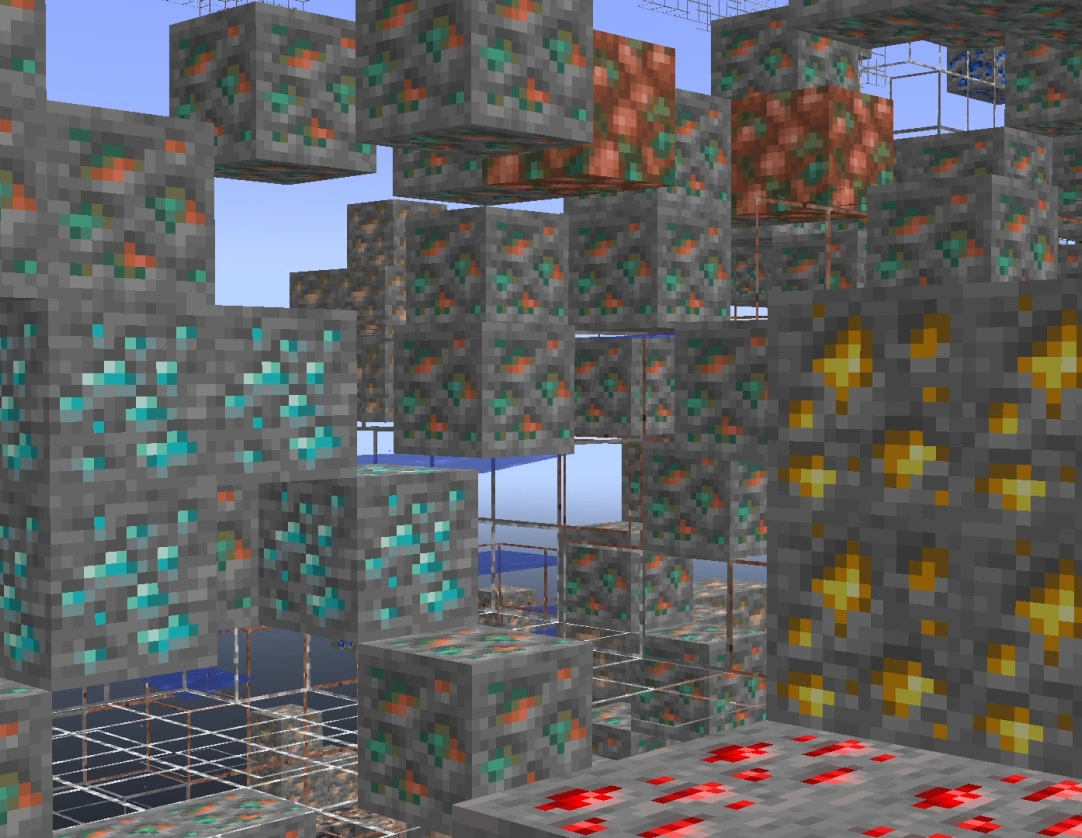
Download X-Ray Texture Pack
Download the very best xray texture pack (for free!) that works for the latest version of Minecraft Bedrock Edition and MCPE (Minecraft Pocket Edition).
Download the very best xray texture pack (for free!) that works for the latest version of Minecraft Bedrock Edition and MCPE (Minecraft Pocket Edition).
In the vast savannah of digital storytelling, few independent animations have captured the raw, visceral bond between species quite like the series My Cheetah Friend. For months, fans have followed the heart-wrenching journey of a lone ranger and an injured cheetah cub, set against the backdrop of a drought-stricken African plain. Now, with the release of My Cheetah Friend -Final- -artoonu-, the saga has reached its emotional and artistic zenith.
But what makes this finale stand out in the crowded space of anthropomorphic art? And why is the tag -artoonu- suddenly appearing across social media feeds and fan forums? Let’s break down the final chapter.
For the uninitiated, My Cheetah Friend is not your typical cartoon. It eschews dialogue for hauntingly beautiful instrumental scores and hyper-expressive character animation. The story follows Kaelo, a displaced wildlife tracker, who discovers a cheetah cub named Sefu (Swahili for "sword") with a broken paw.
Previous episodes documented their struggle: Kaelo crafting a splint, Sefu learning to trust humans, and the pair outrunning a pack of encroaching hyenas. The penultimate episode ended on a cliffhanger, with Sefu finally healed but a wildfire separating them.
For the first three months, Kito kept exactly forty-seven meters of distance. I know because I paced it. Every morning, I would sit on the same flat rock outside the observation blind, and every morning, he would be there—on a termite mound, a fallen acacia, a spine of basalt—watching.
Forty-seven meters. The length of a swimming pool. The distance a cheetah can close in 1.8 seconds.
We existed in that mathematical space. I brought him nothing. No meat bribes, no seductive calls, no desperate kindness that reeked of human loneliness. That is the first thing people get wrong about wild friendships: you cannot want them. Want is a predator in its own right. It scares away the very thing you are reaching for.
So I sat. I read aloud from dog-eared paperbacks. I talked about my mother’s death—not the sanitized version, but the ugly one, the one where I said nothing at the funeral and screamed into a pillow for three nights afterward. I talked about the way grief had hollowed me out, turned me into a walking echo.
Kito’s ears swiveled. He yawned. He did not care.
And that was exactly why it worked.
The last three minutes of My Cheetah Friend -Final- are devastatingly quiet. The rain comes. The grass regrows in a time-lapse montage lasting 60 seconds. Kaelo builds a small shelter. But Sefu does not stay. My Cheetah Friend -Final- -artoonu-
In the most mature choice of the series, Sefu grooms Kaelo’s hand one last time, then walks toward a distant herd of cheetahs. He looks back once. His spots form a teardrop shape against the sunset. Kaelo nods.
There is no death. No melodrama. Just the natural order: a wild thing returning to the wild.
The final shot is a paw print in wet mud. Rain fills it. The words "Ashe" (a Swahili word for "so be it") fade in.
This is the part I cannot make beautiful.
After Kito died, I did not have a breakthrough. I did not write a bestselling memoir or start a cheetah foundation. I went back to the outpost, filed a report, and cried in the shower for three weeks. Then I packed my bag and left.
I have not seen a wild cheetah since.
But here is the thing about grief that no one tells you: It changes shape. It does not go away. It does not get smaller. You just grow a bigger container.
Kito taught me that speed is not the opposite of stillness. It is the other side of it. He taught me that you can love something without possessing it, that you can trust something without understanding it, that you can lose something and still be grateful for the losing.
He taught me that forty-seven meters is not a distance. It is a prayer.
The plot centers on a male Cheetah and his male Canine friend (often depicted as a German Shepherd or similar breed). The story explores the evolution of their relationship from a close friendship into a romantic one. It deals with themes commonly found in "coming out" or "friends-to-lovers" narratives: The Sprint to the Finish Line: Deconstructing “My
My Cheetah Friend -Final- -artoonu- is not just an ending; it is a masterclass in visual restraint. In an era where cartoons over-explain every emotion, this silent, sprinting masterpiece reminds us that the strongest friendships are often the ones we have to release.
Rating: 5/5 Cheetah Spots Watch if you liked: The Fox and the Hound (but realistic), Primal (Genndy Tartakovsky), or Flow (2024).
Search for "My Cheetah Friend -Final- -artoonu-" directly on YouTube or Vimeo. Support independent animators. And bring tissues.
While there is currently no specific media or literature titled "My Cheetah Friend -Final- -artoonu-," the concept of a "cheetah friend" taps into a long-standing fascination with the unique, semi-domesticable nature of these big cats. From historical companions to modern conservation efforts, the bond between humans and cheetahs is a complex story of speed, vulnerability, and mutual respect. A History of Fast Friendships
Unlike other "big cats" like lions or leopards, cheetahs have a history of being tamed—though never fully domesticated. Ancient civilizations, including the Egyptians and Mughals, kept them as hunting companions because they are less aggressive toward humans and lack the "roar" of their cousins, instead communicating through chirps and purrs. The "Nervous" Big Cat
In modern zoology, the concept of a "cheetah friend" has taken a literal turn with the use of companion dogs. Because cheetahs are naturally anxious, zoos often pair them with support dogs to help them stay calm in public habitats. The dog serves as a social cue, signaling to the cheetah that their environment is safe. Key Cheetah Facts
Built for Speed: They are the fastest land animals, capable of reaching 70 mph in short bursts.
Steering Mechanism: A cheetah's long, flat tail acts like a rudder on a boat, helping them make sharp 90-degree turns during a chase.
Vulnerability: Despite their speed, they are experiencing a severe population bottleneck, with fewer than 7,000 remaining in the wild due to habitat loss and illegal trafficking. Cheetahs in Culture and Art
The image of the cheetah remains a powerful symbol in art and lifestyle: Final Verdict My Cheetah Friend -Final- -artoonu- is
Visual Art: Wildlife artists often focus on the intensity of the chase, using acrylics and pastels to capture their sleek anatomy.
Fashion and Decor: "Cheetah print" continues to be a staple in bold glam designs, often associated with speed and elegance.
Whether through the lens of a researcher live-tweeting field work or a child’s plush companion, the cheetah remains an "ambassador" species, reminding us of the thin line between the wild and the familiar.
For your project "My Cheetah Friend -Final- -artoonu-" , adding a Dynamic Speed-Scroll Interactive Chase
feature would perfectly capture the essence of a cheetah's speed in a digital story format.
Since "My Cheetah Friend" is associated with interactive dating sims and digital art, focusing on features that blend storytelling with high-speed mechanics can elevate the user experience: My Cheetah Friend - Steam Community
He closed the distance to thirty meters on a Thursday. I remember because the rains had finally come, and the earth smelled like the inside of a geode—wet mineral, old lightning. He was hunting. Not me. A dik-dik, quick and stupid, zigzagging through the grass. Kito failed. It happens. The textbooks say cheetahs succeed in half their chases. The textbooks lie. In that place, under that sky, success was rarer than mercy.
He was breathing hard, sides heaving like a broken bellows. His tail—that magnificent rudder—twitched with frustration.
I did nothing. No soothing sounds. No outstretched hand.
I just stayed.
And after a long while, he lay down. Thirty meters away. And closed his eyes.
That was the day I understood something I have spent the rest of my life trying to unlearn: Trust is not built. It is surrendered to.